Rethinking What You Know About Addiction
Addiction is one of those topics that’s often misunderstood.
It’s easy to look at it from the outside and think it’s about willpower… that someone should just be able to stop. But when you really start to look closer, you realize how many lives have been touched by addiction in some way—whether directly or through someone they love.
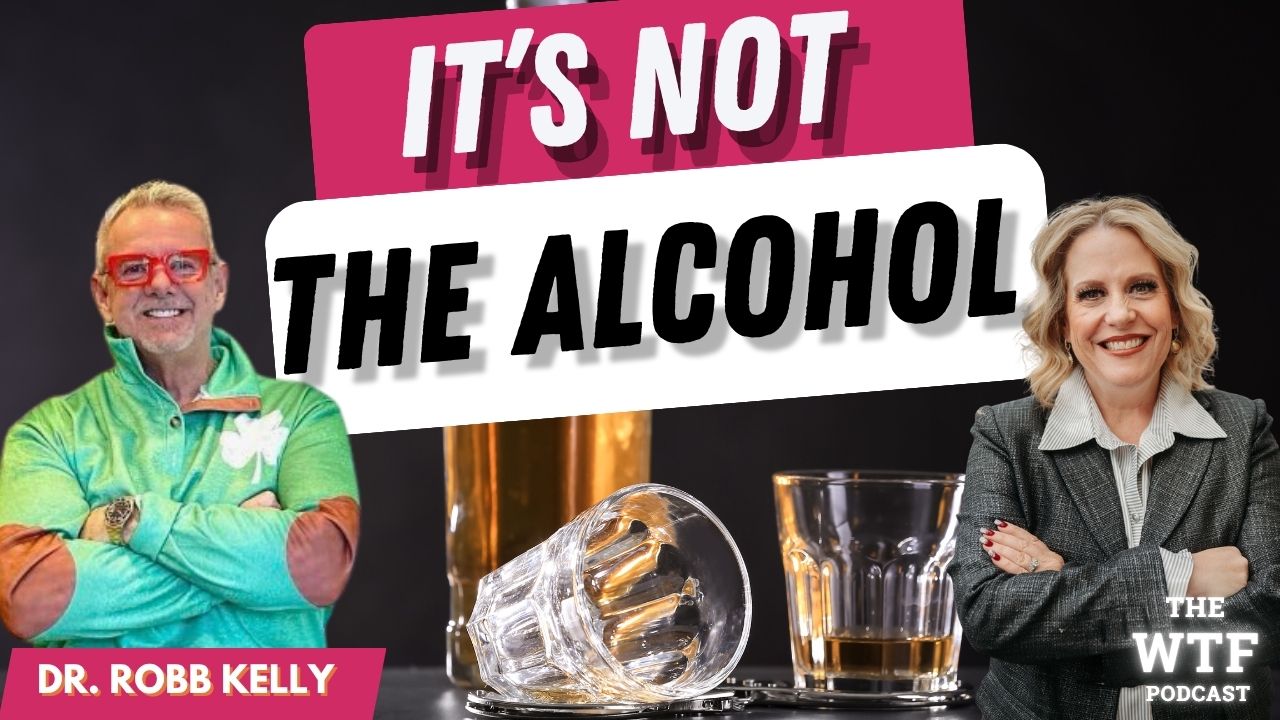
That’s what made my recent conversation with Dr. Robb Kelly so eye-opening.
Dr. Robb is known as “The Addiction Doctor” and has helped thousands of people break free from addiction. But what stood out most wasn’t just his experience—it was how differently he talks about what’s actually driving it.
Because according to him, it’s not really about the alcohol.
That idea alone challenges a lot of what we’ve been taught. There’s a long-standing belief that people struggling with addiction just need more discipline or a stronger reason to stop. But when you understand what’s happening in the brain, that narrative starts to shift.
Dr. Robb explains that for true alcoholics, the brain functions differently. Parts of the brain responsible for survival, memory, and emotional regulation don’t operate the same way. At a certain point, the brain can begin to prioritize the substance as if it’s necessary for survival. So no, it’s not as simple as “just stop.”
And then there’s the piece that really stood out to me—the connection to childhood experiences.
One of Dr. Robb’s core beliefs is that the gateway into addiction is childhood trauma. Not just the big, obvious moments, but the subtle, normalized experiences that shape how we see ourselves, how we cope, and what feels familiar.
Those early patterns don’t just disappear as we get older. They continue to influence behavior, often without us even realizing it.
This is where his perspective really resonated with what I see in my own work.
So many of the people I work with were never taught how to name, acknowledge, or process their emotions. We get really good at pushing through, staying busy, or distracting ourselves. And when emotions aren’t acknowledged, they don’t just resolve on their own—they tend to show up in other ways.
Sometimes that looks like patterns we can’t seem to break.
Sometimes it looks like habits we know aren’t serving us.
And in some cases, it can develop into something more.What I appreciated most about this conversation is that it removes some of the stigma and replaces it with understanding.
Because when you understand what’s actually happening beneath the surface, it opens the door for a different kind of conversation—one rooted in awareness instead of judgment.
If addiction has touched your life in any way, this episode offers a perspective that might shift how you see it.
And sometimes, that shift is where real change begins.


