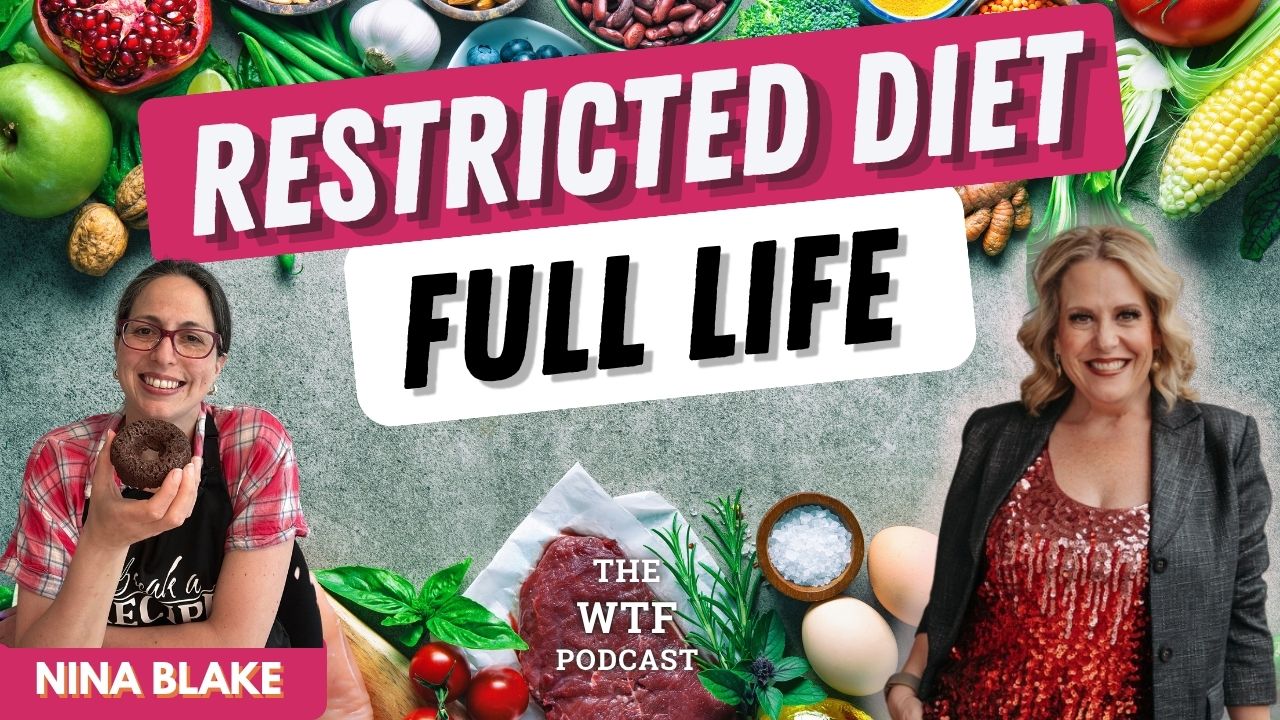
Restricted Diet, Full Life: Navigating the Funk When Food Is the Problem
Let me be real with you for a second. There are few things more exhausting than pulling up a restaurant menu before you even agree to go — not because you're being picky, but because you need to know there's something there for you before you commit to the whole thing. I do this. I look ahead. I scope it out. And even then, you're still the person at the table quietly doing math on what you can actually order.
The funk of food restrictions is a specific kind of funk. It's not just the physical stuff. It's the "can you eat that?" every time you go somewhere. It's being the person who calls ahead to restaurants. It's watching someone bite into a warm, crusty piece of regular bread like it's nothing — because for them, it literally is nothing — while you quietly calculate whether the salad dressing is safe.
And for some people, it's not a couple of things. It's a list. A long list.
I had Nina Blake on the podcast recently, and when she read me her list of foods she can't eat — apples, almonds, bananas, beef, eggs, all grains, dairy, soy, corn, pork, pineapple, and more — I had to pause. My jaw dropped. And then she told me it took years of doctors calling her "just bloated" or flat-out accusing her of lying about her food intake before she got any real answers. She was on a 1,200-calorie diet gaining 24 pounds a year. Not because she was lying. Because her body was fighting something no one had bothered to look for yet.
Here's what Nina's story cracked open for me: the funk of food restrictions isn't just about the food.
It's about the loss. The loss of normal. The loss of ease. The loss of just sitting down and eating without a spreadsheet.
And when that loss goes unacknowledged — or worse, when the people who are supposed to help make you feel like it's your fault — the funk gets heavier.
But Nina also showed me what the way through looks like. She spent a decade reverse-engineering recipes so she could eat food that actually tasted like food again. A decade of failed bread and dirty-sock-smelling cookies (yes, really). She came out the other side not just surviving her restrictions — but helping other families do it too. That's what a pivot looks like. Slow, messy, and completely worth it.
Two questions for you this week:
If food — or anything else — is making you feel like you're on the outside looking in, are you mourning what you've lost, or looking for what's still possible?
Where have you accepted "this is just how it is" when what you actually need is a new recipe?
Nina's full story is in the latest episode. If you or someone you love is navigating restrictions that feel impossible, this one is for you.
🎧 Listen here


